

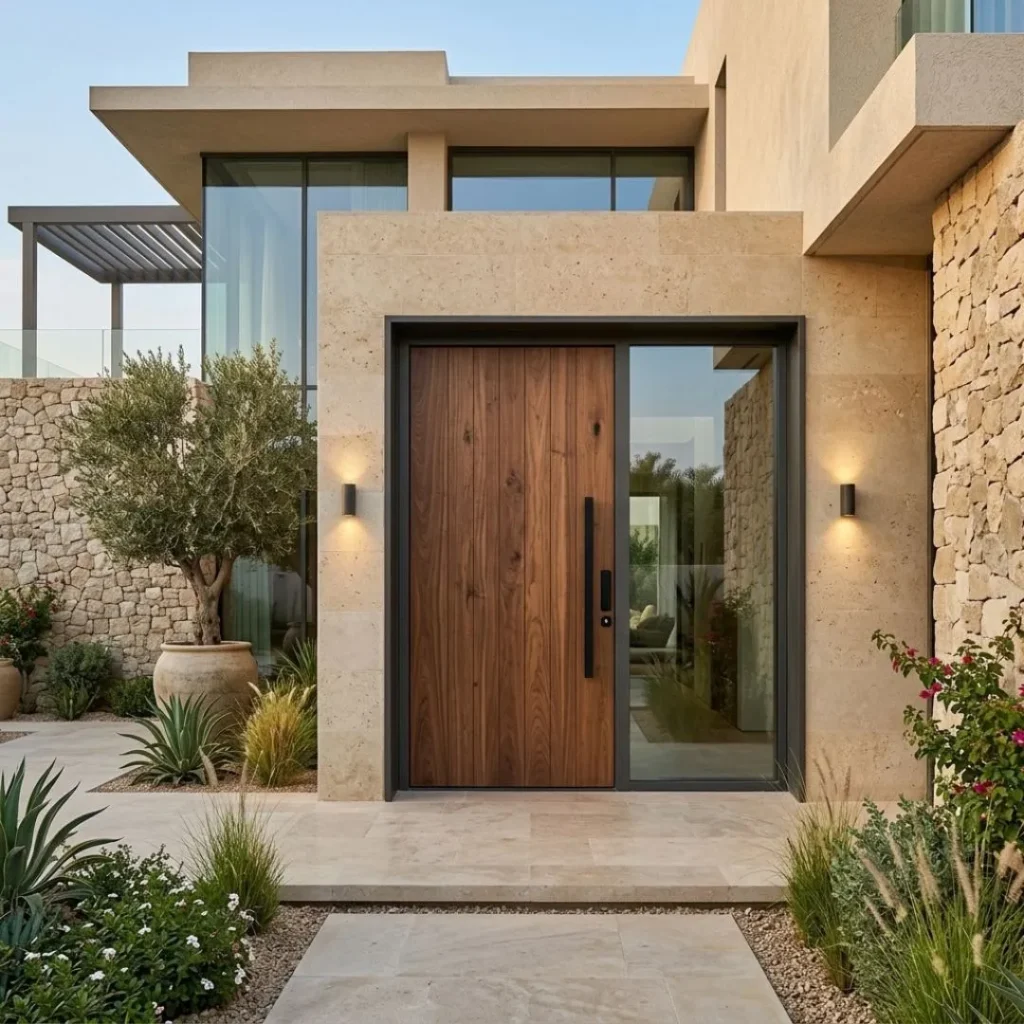
Good woodworking techniques can make a major difference to the strength, appearance and durability of a finished project. Whether you are planning a DIY project, renovating a home or ordering custom woodwork for a villa, understanding how wood is measured, cut, joined and finished helps you make better choices.
From basic measuring and cutting to professional joinery and finishing, different woodworking techniques are used for different applications. In this guide, we explain the most useful methods for working with wood and how they apply to doors, cabinets, furniture and interior woodwork.
What Are Woodworking Techniques?
Woodworking techniques are the methods used to shape, join, assemble and finish wood. Some techniques are simple enough for small DIY projects, while others require professional tools, machinery and experience.
Common woodworking methods include:
- Measuring and marking
- Cutting and shaping
- Drilling and routing
- Sanding
- Wood joining
- Edge finishing
- Veneering
- Surface preparation
- Painting and staining
- Protective finishing
The right method depends on the type of wood, the project design, the required strength and the final appearance.
Essential Woodworking Techniques for Beginners
If you are starting a small woodworking project, learning a few fundamental methods can help you work more accurately and safely.
Measuring and Marking Techniques
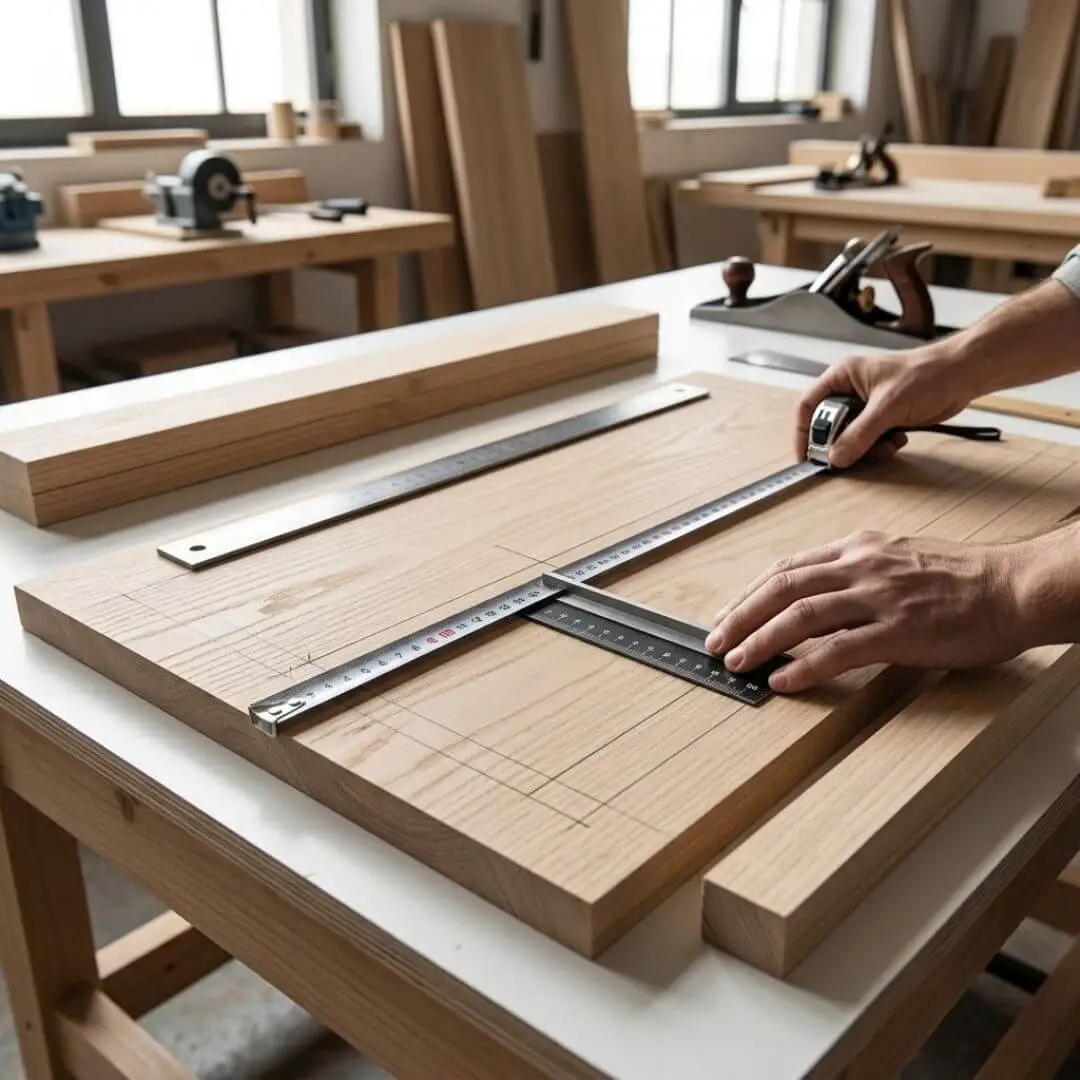
Accurate measurement is one of the most important steps in woodworking. Even a small measurement error can affect the way components fit together.
Before cutting wood, measure the required length and width carefully. Mark the cutting line clearly and check the measurements again before using power tools.
For doors, cabinets and built-in furniture, measurements also need to account for wall openings, clearances, hardware and installation requirements.
Cutting Techniques for Accurate Woodwork
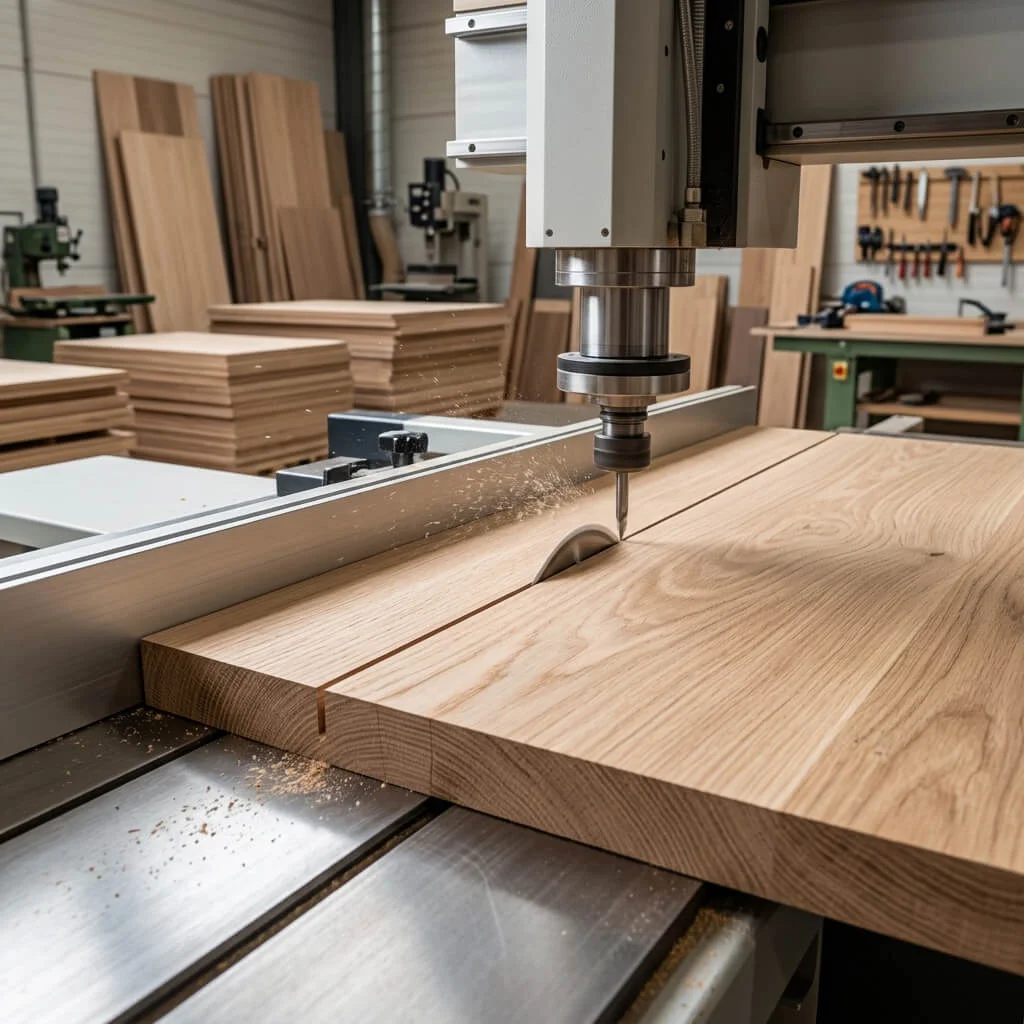
Cutting transforms raw timber or wood panels into the components needed for a project.
Depending on the material and design, professionals may use:
- Circular saws
- Table saws
- Mitre saws
- Jigsaws
- Panel saws
- CNC machines
- Hand saws
The cutting method should match the material. Clean, accurate cuts reduce gaps and make later assembly easier.
For visible furniture, doors and cabinets, cutting accuracy is particularly important because even small inconsistencies can become noticeable after installation.
Drilling and Routing
Drilling creates holes for screws, handles, hinges and other hardware. Routing can create grooves, profiles, rebates and decorative details.
Professional routing can also be used to create:
- Door edge profiles
- Cabinet grooves
- Concealed hardware spaces
- Decorative channels
- Recessed panels
- Cable openings
The correct bit and cutting speed depend on the material and application.
Wood Joining Techniques
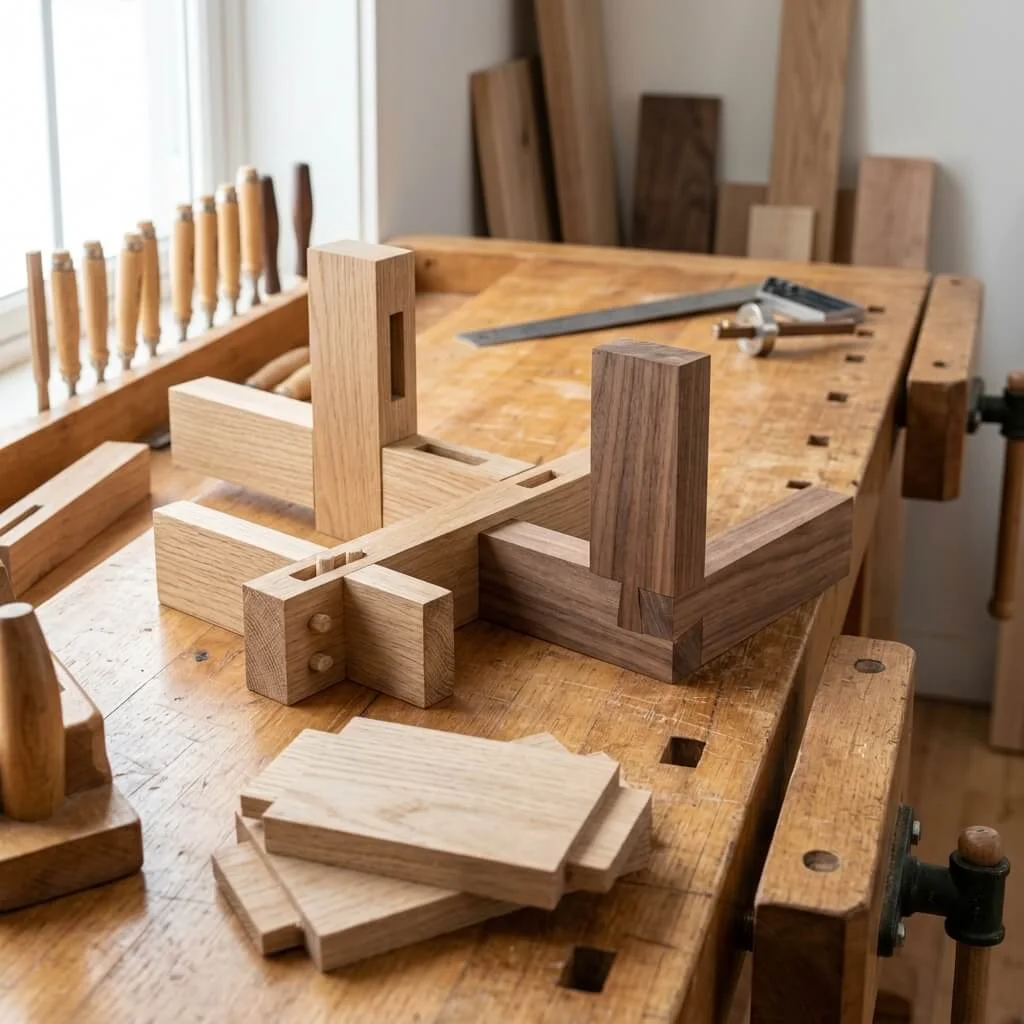
Joining is one of the most important areas of woodworking. A good joint connects individual components securely while maintaining a clean appearance.
Common wood joining methods include:
Butt Joints
A butt joint is one of the simplest methods. One piece of wood meets another at its edge.
It is useful for simple construction but may require screws, dowels, biscuits, adhesive or another reinforcement depending on the application.
Dowel Joints
Dowel joints use small cylindrical wooden pins to align and strengthen two pieces of wood.
They are commonly used in furniture and cabinet construction where accurate alignment is important.
Mortise and Tenon Joints
A mortise and tenon joint connects one component using a projecting section that fits into a corresponding opening.
This traditional woodworking method can provide strong mechanical support when properly designed and manufactured.
Biscuit Joints
Biscuit joining uses compressed wooden biscuits inserted into matching slots.
This technique is useful for aligning panels and joining components in furniture and cabinetry.
Pocket-Hole Joinery
Pocket holes allow screws to connect components from an angled concealed position.
They are useful for certain furniture and cabinet applications where speed and practical assembly are important.
The best joint depends on the project’s structure, appearance, material and expected use.
Sanding and Surface Preparation
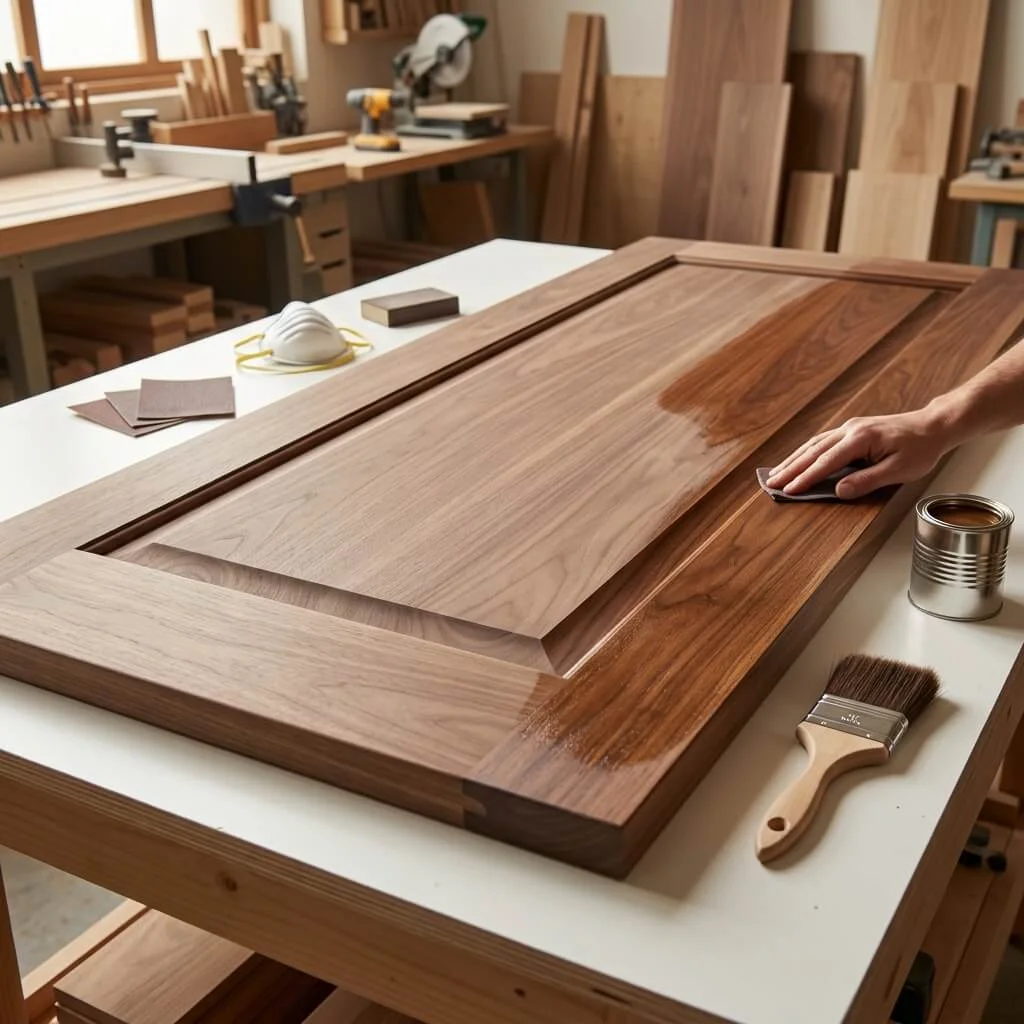
Sanding removes rough areas, machining marks and minor surface imperfections before finishing.
A typical process may involve progressively finer abrasive grades rather than using one abrasive throughout the entire project.
Proper surface preparation helps create a smoother and more consistent finish.
For doors, cabinets and furniture, extra attention should be given to visible edges, corners and areas around handles and hardware.
Wood Finishing Techniques
Finishing protects the surface while also influencing the final appearance of the wood.
Popular finishing options include:
- Clear protective coatings
- Wood stains
- Paint
- Natural oil finishes
- Veneer finishes
- Decorative laminates
- Protective sealers
The appropriate finish depends on the material, location and desired appearance.
For example, an interior wooden door may require a different finishing system from a door exposed to outdoor conditions or a kitchen cabinet exposed to heat, moisture and frequent cleaning.
Woodworking Techniques for Wooden Doors
Doors require accurate construction because they need to remain functional while also providing a clean architectural appearance.
Professional woodworking techniques for doors can include:
- Accurate panel cutting
- Frame construction
- Edge preparation
- Veneer application
- Groove and profile creation
- Hinge preparation
- Hardware installation
- Surface sanding
- Protective finishing
For large villa entrance doors, construction methods should also consider door weight, hardware, frame strength and installation conditions.
Custom Wooden Door Construction
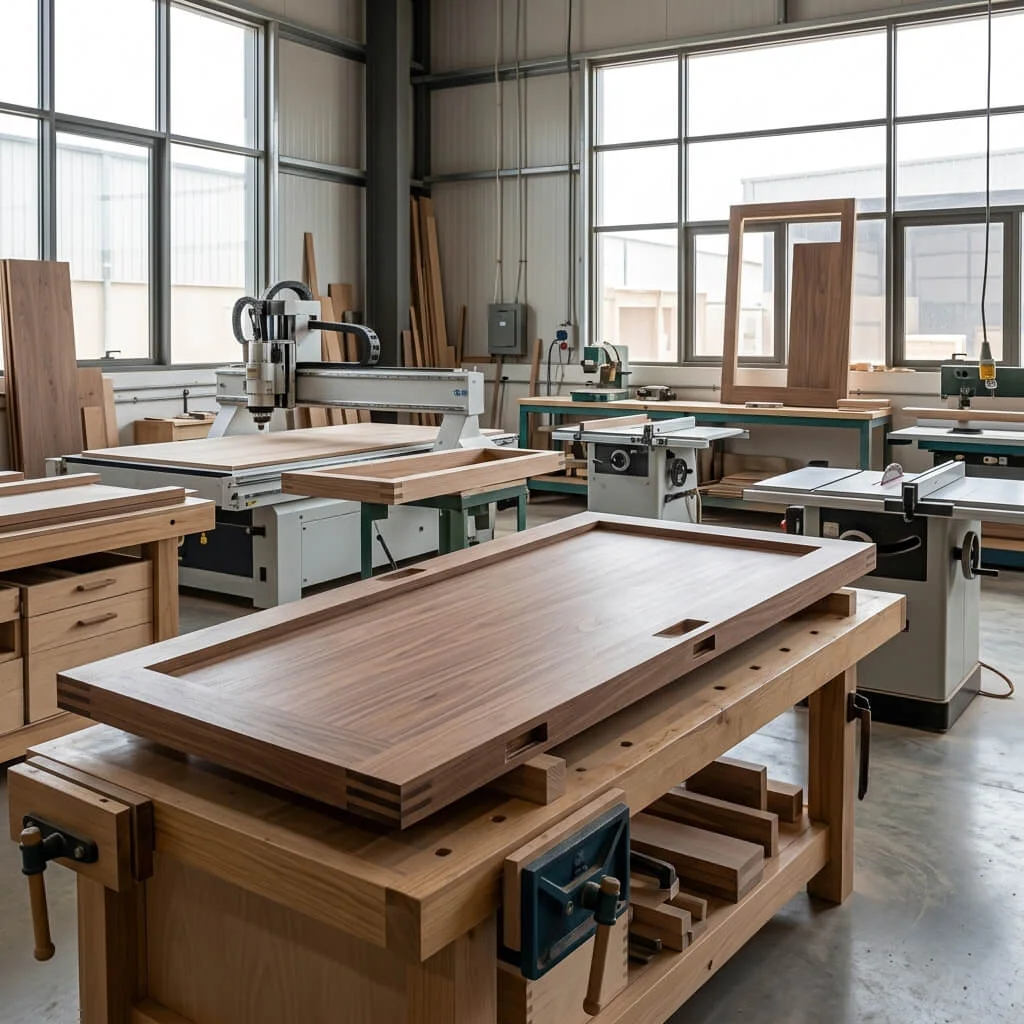
Custom doors are manufactured according to the project’s dimensions and design requirements.
Depending on the specification, a custom door may include:
- Solid wood elements
- Engineered wood
- Natural wood veneer
- Decorative panels
- Glass inserts
- Louvered sections
- Flush surfaces
- Custom frames
The construction should be selected according to where the door will be installed and how frequently it will be used.
Woodworking Techniques for Kitchen Cabinets
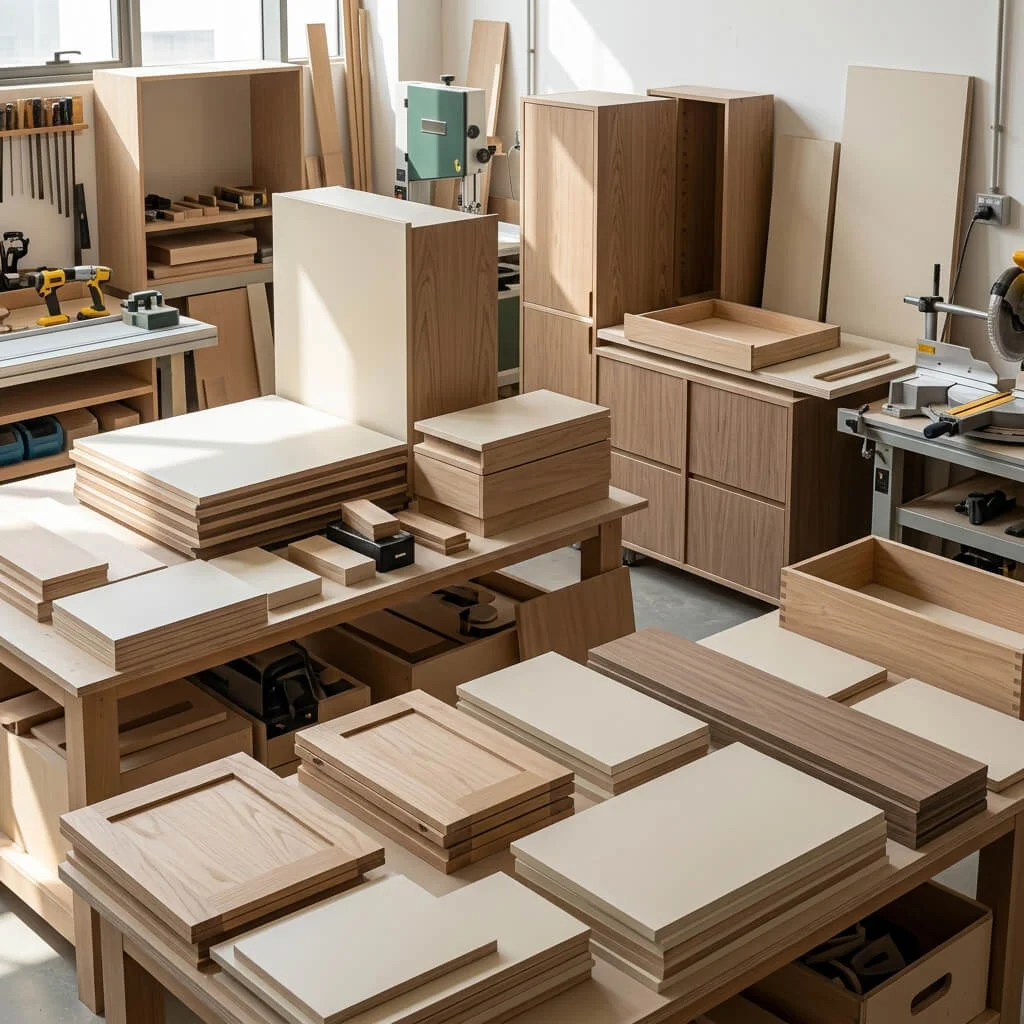
Kitchen cabinets require accuracy because multiple components need to work together within a limited space.
Important cabinet-making methods include:
- Accurate panel cutting
- Edge banding
- Cabinet box assembly
- Drawer construction
- Hinge installation
- Shelf installation
- Hardware fitting
- Surface finishing
Custom kitchen cabinets can also include practical features such as tall storage units, pull-out storage, concealed drawers and dedicated appliance spaces.
For UAE kitchens, material and finish selection should also consider heat, humidity, cleaning and everyday use.
Woodworking Techniques for Built-In Furniture
Built-in wardrobes, TV units, wall panels and storage systems need to be designed around the existing architecture.
Unlike freestanding furniture, built-in woodwork often needs to accommodate:
- Uneven walls
- Columns
- Electrical points
- Air-conditioning requirements
- Skirting
- Ceiling height
- Doors and access areas
Accurate site measurement is therefore essential before manufacturing begins.
Traditional vs Modern Woodworking Methods
Traditional woodworking relies heavily on hand tools and established joinery methods. These techniques remain useful for detailed furniture, restoration work and specialist craftsmanship.
Modern woodworking combines traditional knowledge with advanced machinery.
CNC cutting, precision panel saws, modern sanding equipment and professional finishing systems can improve repeatability and production accuracy.
The two approaches are not necessarily alternatives. Experienced woodworkers often combine traditional craftsmanship with modern manufacturing methods to achieve the required result.
Choosing the Right Woodworking Method
There is no single technique that works for every project.
Before choosing a method, consider:
Type of Wood
Different timber species, veneers, MDF, plywood and engineered materials behave differently during cutting and finishing.
Project Requirements
A decorative wall panel has different requirements from a heavy entrance door or frequently used kitchen cabinet.
Strength
Structural and frequently used components need suitable joints and materials.
Appearance
Visible furniture and architectural woodwork require careful attention to grain direction, joints, edges and finishing.
Location
Indoor and outdoor applications have different environmental requirements. Kitchens and bathrooms may also require materials and finishes selected for increased moisture exposure.
Available Tools
Simple projects may only require basic hand tools, while complex custom manufacturing can require professional machinery.
Common Woodworking Mistakes to Avoid
Even a well-designed project can suffer from avoidable mistakes.
1. Measuring Only Once
Always verify important dimensions before cutting or manufacturing.
2. Choosing the Wrong Material
The cheapest material is not always appropriate for the intended application.
3. Ignoring Wood Movement
Natural wood can respond to changes in moisture and temperature. Construction methods should take this into account.
4. Rushing Surface Preparation
Poor sanding or preparation can remain visible after staining or painting.
5. Using Unsuitable Hardware
Door hinges, handles, cabinet hinges and drawer systems should be selected according to the weight and intended use of the component.
6. Forgetting Installation Conditions
A perfectly manufactured component may still perform poorly if the opening, wall or installation conditions have not been considered.
Woodworking in the UAE
Woodwork in the UAE often needs to be designed with the local environment and building conditions in mind.
Heat, humidity, air-conditioning, indoor climate changes and frequent use can all influence material and finish selection.
For this reason, custom woodwork should not be based only on appearance. Material selection, construction, finishing and installation all contribute to long-term performance.
At MM & SONS WOOD WORKS, we manufacture custom woodwork for residential and commercial projects across the UAE, including Dubai, Abu Dhabi, Sharjah, Ajman, Umm Al Quwain, Ras Al Khaimah and Fujairah.
Our work includes:
- Custom wooden doors
- Main entrance doors
- Interior doors
- Kitchen cabinets
- Wardrobes
- Wall panels
- TV units
- Wooden windows
- Custom furniture
- Interior joinery
- Bespoke woodwork
When Should You Hire a Professional Woodworker?
DIY woodworking can be suitable for small projects when you have the appropriate tools, skills and workspace.
Professional woodwork is often more practical when the project involves:
- Large wooden doors
- Multiple custom doors
- Full kitchen cabinetry
- Built-in wardrobes
- Villa woodwork
- Complex architectural joinery
- Large wall panels
- Custom commercial interiors
- Precise installation requirements
Professionals can manage measurement, material selection, manufacturing, finishing and installation as one coordinated process.
How MM & SONS WOOD WORKS Approaches Custom Woodwork
Every project starts with understanding the space and its requirements.
Our process can include:
1. Site Measurement
The opening or installation area is measured carefully.
2. Design Discussion
The preferred style, material, finish and functional requirements are discussed.
3. Material Selection
Materials are selected according to the application, appearance and expected use.
4. Manufacturing
Components are manufactured using appropriate woodworking and joinery methods.
5. Finishing
Surfaces are prepared and finished according to the selected specification.
6. Installation
The completed woodwork is installed and adjusted at the project site.
This approach helps connect design, manufacturing and installation instead of treating them as separate stages.
Frequently Asked Questions About Woodworking Techniques
What are the most common woodworking techniques?
Common techniques include measuring, cutting, drilling, routing, sanding, joining, veneering and finishing. The appropriate method depends on the project and material.
What woodworking technique is best for beginners?
Basic measuring, marking, straight cutting, sanding and simple joining methods are good starting points. More advanced joinery and machinery require additional training and experience.
Which woodworking techniques are used for wooden doors?
Door manufacturing can involve panel cutting, frame construction, edge preparation, routing, veneer application, sanding, hardware preparation and finishing.
What woodworking techniques are used for kitchen cabinets?
Cabinet manufacturing commonly involves accurate panel cutting, edge banding, cabinet assembly, drawer construction, hinge installation and surface finishing.
Can custom woodworking be made for unusual spaces?
Yes. Custom woodwork can be designed around specific dimensions, wall conditions, columns, openings and architectural requirements.
Is professional woodworking better than DIY?
The right choice depends on the project’s size and complexity. Small projects may be suitable for DIY, while large doors, complete kitchens and built-in joinery generally require more specialized tools, experience and installation knowledge.
Final Thoughts on Woodworking Techniques
Understanding woodworking techniques helps you appreciate how a piece of wood becomes a finished door, cabinet, furniture item or architectural feature.
Good results depend on more than cutting wood. Accurate measurements, suitable materials, strong joints, careful surface preparation, appropriate finishing and professional installation all contribute to quality woodwork.
For custom doors, kitchens, wardrobes and architectural joinery in the UAE, working with an experienced woodwork manufacturer can help turn a design idea into a practical finished product.
If you are planning a residential or commercial woodwork project, MM & SONS WOOD WORKS can help with custom design, manufacturing and installation.